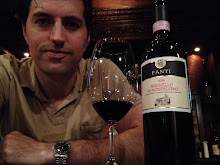
As I prepare for another adventure to Europe, I am reminded at just how complex our industry has become. 20 years ago, when I began my career in wine service, it seemed so simple. In your choices were Chablis (most likely California Chardonnay), White Zinfandel or Merlot. How times have changed? Not only does your local pub, with wine service out of 1.5L sitting at room temperature and been open longer than the waitress has been employed, serve a selection larger than 6 wines; but your fine dining restaurants are now expected carry and understand wine programs in the 100's. Oh, how times have changed.
Now wine professionals travel the globe to attend trade events that often barrel taste wines yet to be released just for an opportunity to stake claim to those few bottles that may one day mold your next memory. The sophisticated side of wine measures success in Quality and reputation not in production widgets and profitability. The wine industry goes against the grain of everything one learns in business school. Which is where the saying, "How do you make a small fortune in the wine business? Start with a large one!" comes from. Yet competition remains fierce as passions and love affairs with Vitis Vinifera remain so strong. Awards for wines and now awards for Sommeliers, producing an even more competitive environment for wine professionals.
Competition for awards and degrees have become a large part of the life of a Sommelier. Complex exams, blind tastings & wine service now separate on paper the knowledgeable from the enthusiast. In an Era where degrees count more than experience, Wine professionals are starting to see this trend as well. Most successful wine professional will agree, the best part of a career in wine is the study. The only way to learn is to have experience, and experience tastes so good. This year I set a goal of getting back to Europe (having a young child can have challenges in the traveling to Europe for weeks at a time department) & continuing the Master Court Sommelier course I started a couple of years ago (Pre-Baby.) I invite all of you to come along (Vicariously of Course.) I plan to make short video diaries of my travel, my classes & my general wine experiences.
Introducing Wine 101 - My Monday Night Classes. Attend my weekly classes as I prepare for upper level sommelier exams by teaching you the knowledge that I learn along the way. A class schedule is on our website under the link Wine 101. A short note: It is sad to see Crush close, if you have friends that used to go to Crush and don't have a new home (let's face it - a good wine bar is like a Home away from Home) tell them to come to Bodega Bar. Remember our Wine Fair is this Saturday and would be a great way to introduce new friends to Bodega Bar.
Cheers,
Amier
Wednesday, February 24, 2010

Tuesday, December 1, 2009
24 Great Wine Gifts for Christmas
With 24 Days til Christmas,
Give your love something Divine,
Pop the cork and it sure to go fast,
This gift from a Chianti Vine.
Sangiovese full of rich Black Cherry,
Yet plenty of structure and Grip,
With hints of Cedar and Oak,
Finishing with Bold BlackBerry.
Produced by the estate Fontodi,
In the perfect year of 2006,
This robust Chianti Classico,
Is one of my favorite in the Mix!
Fontodi Chianti Classico 2006
91 Parker
Retail - $50 / Bottle
Special - $35 / Bottle
Limit 3 Bottles per customer. Email amier@chateauwinemarket.com to reserve your bottles. First come first serve.
Cheers, Amier
Give your love something Divine,
Pop the cork and it sure to go fast,
This gift from a Chianti Vine.
Sangiovese full of rich Black Cherry,
Yet plenty of structure and Grip,
With hints of Cedar and Oak,
Finishing with Bold BlackBerry.
Produced by the estate Fontodi,
In the perfect year of 2006,
This robust Chianti Classico,
Is one of my favorite in the Mix!
Fontodi Chianti Classico 2006
91 Parker
Retail - $50 / Bottle
Special - $35 / Bottle
Limit 3 Bottles per customer. Email amier@chateauwinemarket.com to reserve your bottles. First come first serve.
Cheers, Amier
Thursday, July 9, 2009
Cork versus Screwcap
Well my blog this week will be focused on your thoughts on wine enclosures. Do you think "cheap, cheap" every time your friend brings out their favorite wine in a screwcap? Or do you let the wine speak for itself? No doubt about it wineries are looking for alternative wine enclosures. I will get to why later in this blog, lets first examine the difference and perception of the two most popular options.
From the Zork, to glass capsules (German), Stelvin (a.k.a. Screwcap), Synthetic Cork, Bag in a Box, to good old fashion cork; do you feel the way it is sealed reflects quality?
Did you know that on average it cost a winery more to bottle wines with Screwcap enclosures than Cork?
Did you know that majority of TCA taint in wines comes from the cork, which is where wine when it is flawed by TCA gets it's corked name?
TCA accounts for the flaw in wine in which the wine losses fruit expression and is replaced by a musky, mildew, wet cardboard aroma that for me finishes with a tongue depressor from the doctor's office aftertaste. It affects up to 1 in 14 bottles bottled in a cork enclosure. Next time you are at a restaurant and something doesn't seem quite right. You may be a victim of TCA. With the cost of shipping and the opportunity cost of having to replace bottles with TCA or wine flaws. Wineries are looking for a way to cut back on returns.
New Zealand has gone 95% Screwcap and it is almost rare now to find wines not in screwcap from these Islands. The thought for them is they predominately produce Sauvignon Blanc which is intended to be consumed in its first year of bottling. So how the wine goes into the bottle will be the exact way it comes out by the end user. There are exceptions to this rule of thumb, but in general it is accurate.
France has really struggled to adopt tolerance for the screwcap enclosure, sighting the wines aren't able to breath properly and it will not be appropriate for the great age worthy wines. Well some evidence shows that wine ages just as well in screwcap versus a high quality cork. As of now, only lower end and bulk negociant producers are using this as an enclosure. Reality check cork comes from cork trees which is becoming harder and harder to find good corks. Some producers higher a cork sampler to smell each cork for any trace of TCA. This is not only expensive but likely a waste of time. Doesn't that seem like the worst job you could have? Its the whole I think this milk is spoiled what do you think.
Italy seems to be in no hurry to adapt this type of enclosures for its wines as well. In fact, really it seems to only be largely used in New World wine growing regions. It seems that Europeans prefer traditions to modern technology. Exceptions are Cell Phones and Stainless Steel Temperature controlled wine-fermenting tanks, but hey those are like the invention of the car.
The most expensive bottle of wine I have found to date in a Screwcap is Plumpjack Reserve Cabernet Sauvignon ($250), which each year releases its wine half in screwcap and the other half in cork. Maybe if they had been the first to use the technology instead of Gallo with jug blush, maybe we would less prejudice to the idea. I think by the end of it all with everyone becoming so environmentally conscience, the winner will be the one that is most green. My vote is to go for the glass enclosure. It is fun and it keeps all material that comes in contact with the wine consistent. What do you think should replace cork?
From the Zork, to glass capsules (German), Stelvin (a.k.a. Screwcap), Synthetic Cork, Bag in a Box, to good old fashion cork; do you feel the way it is sealed reflects quality?
Did you know that on average it cost a winery more to bottle wines with Screwcap enclosures than Cork?
Did you know that majority of TCA taint in wines comes from the cork, which is where wine when it is flawed by TCA gets it's corked name?
TCA accounts for the flaw in wine in which the wine losses fruit expression and is replaced by a musky, mildew, wet cardboard aroma that for me finishes with a tongue depressor from the doctor's office aftertaste. It affects up to 1 in 14 bottles bottled in a cork enclosure. Next time you are at a restaurant and something doesn't seem quite right. You may be a victim of TCA. With the cost of shipping and the opportunity cost of having to replace bottles with TCA or wine flaws. Wineries are looking for a way to cut back on returns.
New Zealand has gone 95% Screwcap and it is almost rare now to find wines not in screwcap from these Islands. The thought for them is they predominately produce Sauvignon Blanc which is intended to be consumed in its first year of bottling. So how the wine goes into the bottle will be the exact way it comes out by the end user. There are exceptions to this rule of thumb, but in general it is accurate.
France has really struggled to adopt tolerance for the screwcap enclosure, sighting the wines aren't able to breath properly and it will not be appropriate for the great age worthy wines. Well some evidence shows that wine ages just as well in screwcap versus a high quality cork. As of now, only lower end and bulk negociant producers are using this as an enclosure. Reality check cork comes from cork trees which is becoming harder and harder to find good corks. Some producers higher a cork sampler to smell each cork for any trace of TCA. This is not only expensive but likely a waste of time. Doesn't that seem like the worst job you could have? Its the whole I think this milk is spoiled what do you think.
Italy seems to be in no hurry to adapt this type of enclosures for its wines as well. In fact, really it seems to only be largely used in New World wine growing regions. It seems that Europeans prefer traditions to modern technology. Exceptions are Cell Phones and Stainless Steel Temperature controlled wine-fermenting tanks, but hey those are like the invention of the car.
The most expensive bottle of wine I have found to date in a Screwcap is Plumpjack Reserve Cabernet Sauvignon ($250), which each year releases its wine half in screwcap and the other half in cork. Maybe if they had been the first to use the technology instead of Gallo with jug blush, maybe we would less prejudice to the idea. I think by the end of it all with everyone becoming so environmentally conscience, the winner will be the one that is most green. My vote is to go for the glass enclosure. It is fun and it keeps all material that comes in contact with the wine consistent. What do you think should replace cork?
Subscribe to:
Posts (Atom)